Realigning Partner Job Satisfaction by Expanding the Capabilities Management Experience
My Role
Lead UX Designer (Desktop Experience)
Qualitative Researcher
Team
Design Manager
Product Designer
UX Research Manager
Senior UX Designer
7 Developers
3 Stakeholders
Duration
3 1/2 months
Manufacturers big and small join the Xometry partner network to find good-fit jobs from customers. They detail their machines' specifications and add various processes to be matched to jobs based on their manufacturing requirements. These machines and capabilities are tied together as machines help inform what processes partners can take and at what scale. However, fine grained details about partners were dispersed across spreadsheets maintained by staff with no centralized collection of partner information.
Simplifying the partner experience without stripping salient information.
Partner capability data was scattered across staffing spreadsheets. Where it needed to be—each shop's capabilities and machine management pages—was rarely updated by partners and did not even offer the full breadth of possible manufacturing processes. I needed to improve the pairing between partner machines and processes while making it easier for partners to manage them on the platform in order to match them to better-fit jobs.



Understanding where the breakdown was happening.
Based on research with stakeholders, it became clear that partners rarely used or fully updated their capabilities management after onboarding with Xometry. They were uncomfortably separated, outdated, time-consuming to update, and did not fully capture the breadth of processes used by partners. This meant partners were not getting matched to good-fit jobs, customers often did not receive desired quality parts, and staff needed to manually intervene and match orders to partners.
Repurposing inherited design ideas.
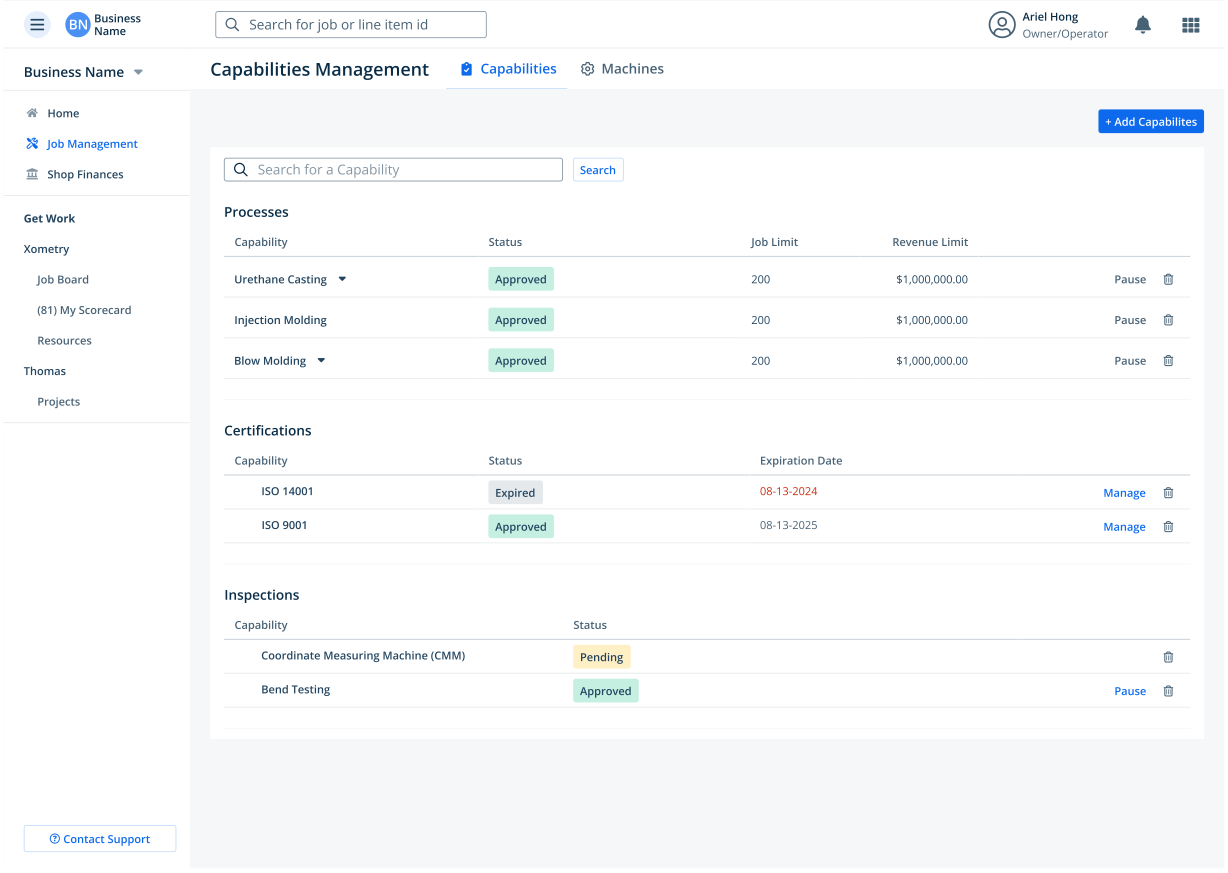
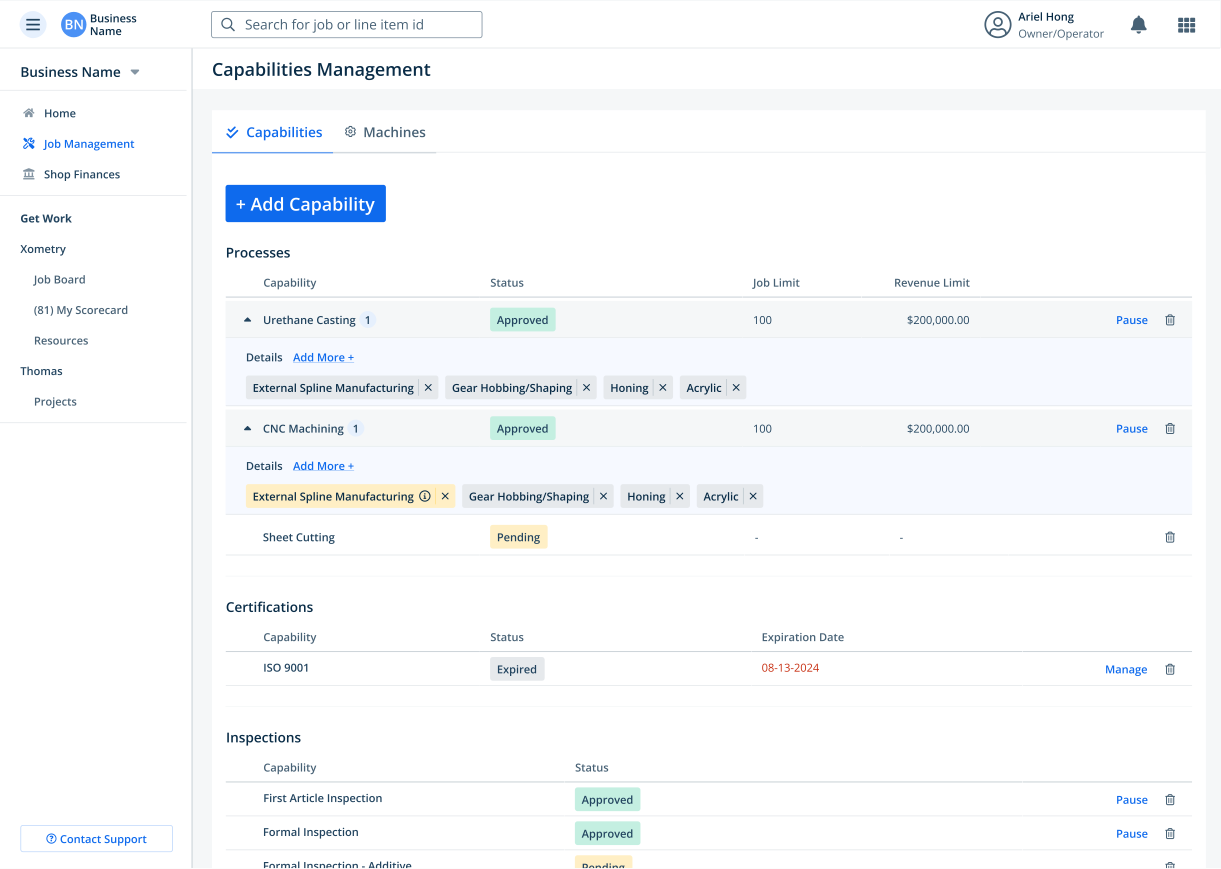
Following conversations and early feedback sessions with various stakeholders, I continuously tweaked the capabilities and machines flows to capture more granular data without becoming taxing. I focused on reworking the designs left behind by the previous designer to better allow for partners to add subprocesses and material requirements related to their already approved processes while also being able to pause processes or apply for new ones. I wanted these features to help capture the various circumstances that befall manufacturers such as machines breaking, buying new ones, or trying to diversify offerings.
Using feedback to drive design changes.
Leading moderated usability tests with various Xometry partners allowed me keen insight into what Xometry partners needed. Most of them rarely used the machines and capabilities pages since they did not believe it helped match them with better jobs. One partner noted how the machines they onboarded with did not get reflected in Xometry job offers until talking with staff, which emphasized the importance of this project in helping to better align partner abilities with their Xometry job board. Additionally, partners highlighted the importance of mobile functionality and ease as they need to update their information while working on the job. Prioritizing mobile functionality meant many interactions needed to be simplified. Therefore, I went back to the designs to remove hover states, assisted our mobile designer, and reduced additional features that were not easily adopted by our testers.
Low Feature Adoption
Partners rarely returned to update their capabilities after onboarding, limiting match quality.
Mismatched Job Offers
Machines added during onboarding weren't reflected in job offers, requiring staff to manually intervene.
Mobile First
Partners update capabilities on the job, requiring simplified interactions and removal of hover-only states.
Exponential growth for the partner platform and setting the stage for business expansion.
This project promoted greater job alignment and user satisfaction. Partners can provide more granular details on their manufacturing capabilities with ease. Easing the process for partners to specify their manufacturing abilities gives Xometry more clarity into their partner network, allowing them to match partners to the most suitable jobs for them while ensuring customers get quality-made parts. After beta testing 46 partners, the team released an updated system to all users. Since the release, there were around 5,000 new active and approved partner capabilities in 3 months.
850%
Growth in partner capabilities
250%
Growth in partner machines
Over 50
Added machine attributes
27%
Increase in Xometry partner capabilities data
Next case
Omniscale.io