Balancing Federal Security Requirements with Global Team Efficiency
My Role
Lead UX Designer
UX Researcher
Team
Design Manager
2 Product Designers
3 Developers
3 Stakeholders
Duration
4 months
Description
An internal workflow for seeing all requests to open lockdown files and an interface to review them.
Every file that entered Xometry was locked by default, regardless of whether it contained export-controlled data or not, so the majority of files were not accessible by unapproved US and global staff. The inconvenience was actively hurting the business: global support teams were paralyzed leading to delayed customer resolution while staff burned time on reviewing file access requests.
Building a new file classification system from the ground up.
After speaking with various stakeholders in our global support and accounting teams, it became clear file management and the existing case-by-case manual review of file security severely limited customer case resolution. Our global staff could not access secured files, but often needed pertinent, non-regulated documents to understand how to resolve customer issues. The new workflow needed easy task repeatability, correction and removal of classification overlaps, and secure but accessible contextual details tied to each file.
File Management
Over 90% of documents aren't export-controlled but required manual review.
Processing Slowdowns
Staff burned hours manually reviewing access requests for non-sensitive documents.
Global Support Paralyzed
Global teams couldn't resolve issues fast enough, hurting customer satisfaction.
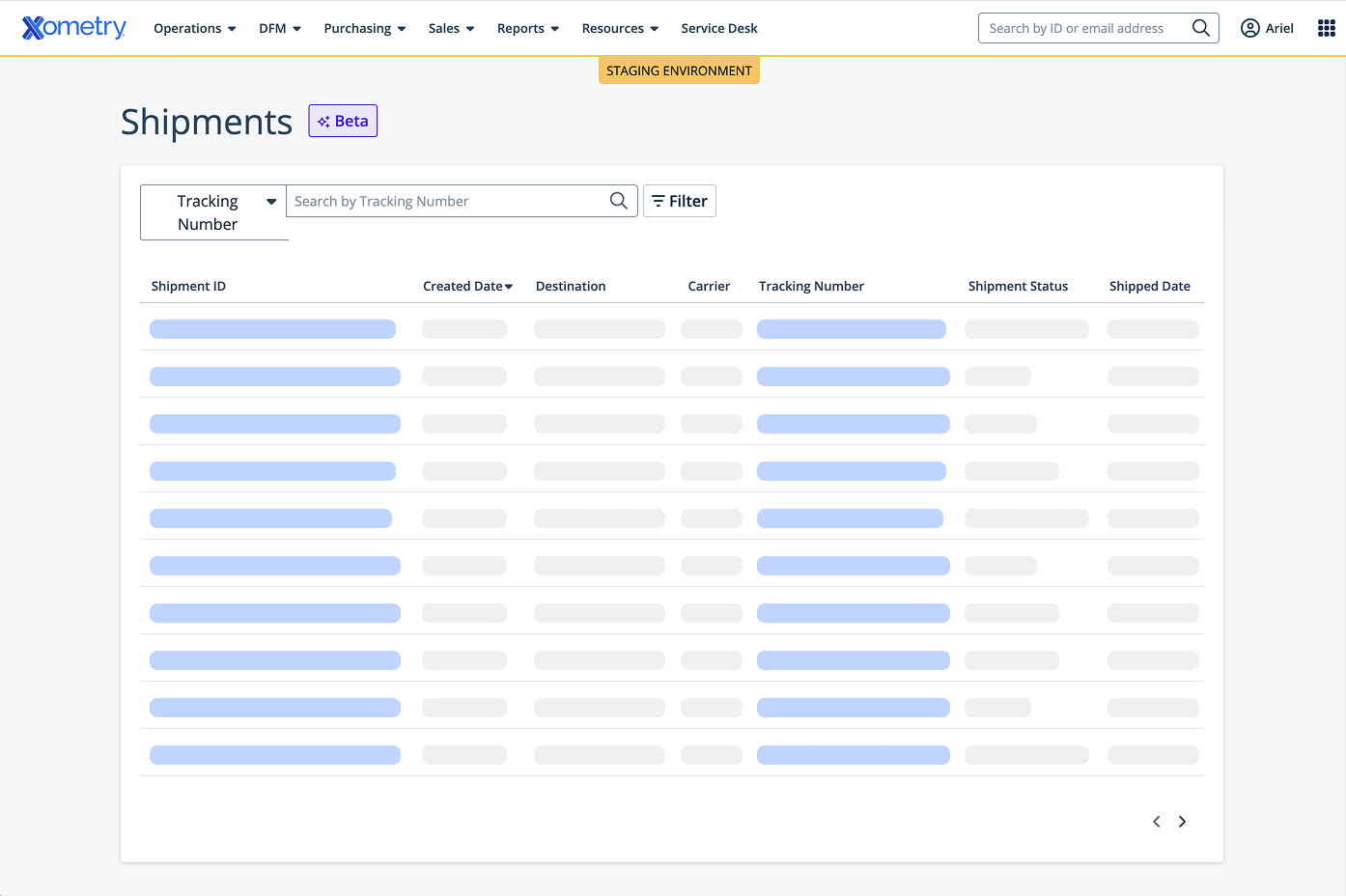
Imagining a new on-platform workflow.
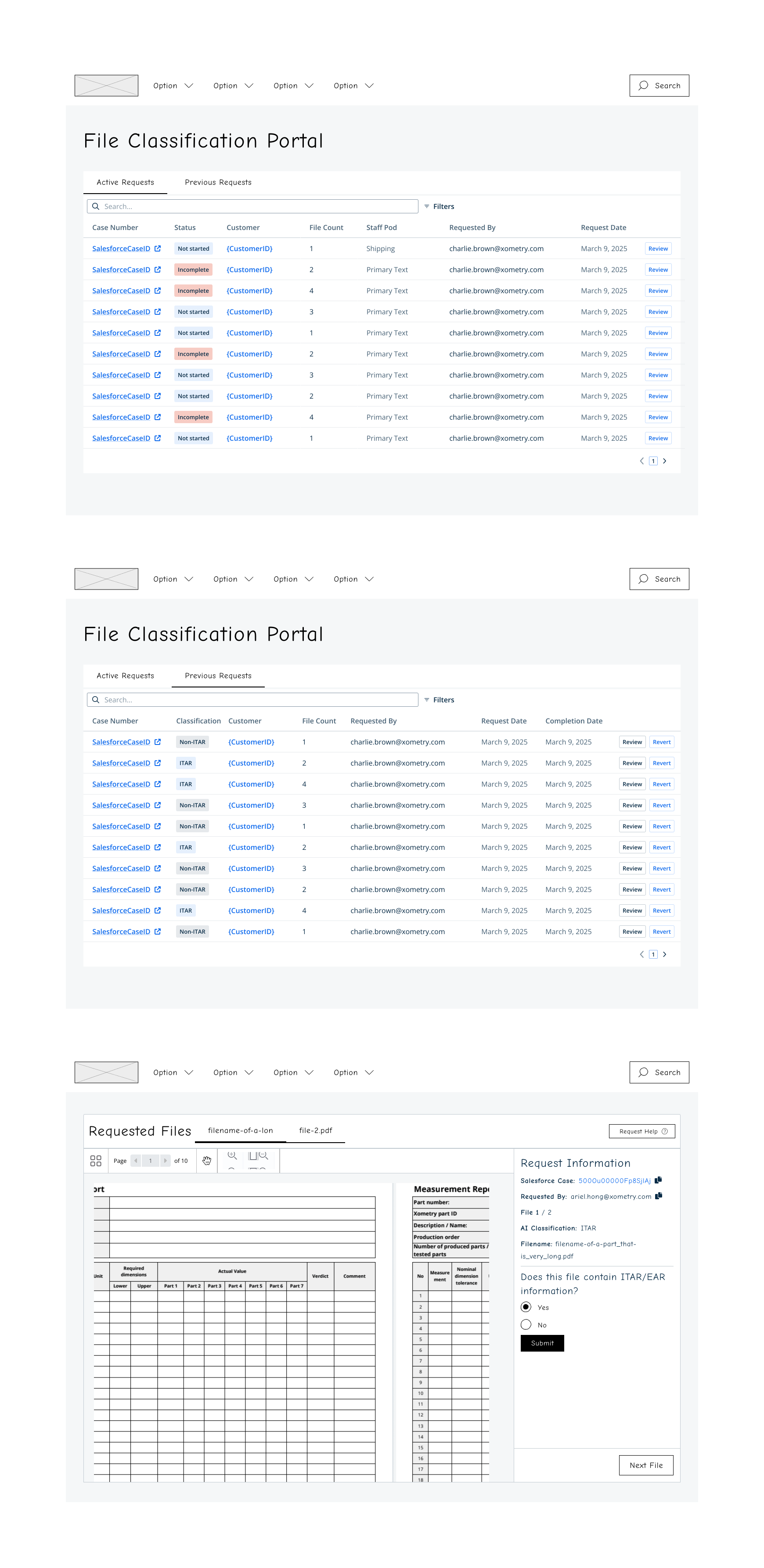
Since responsibility for file management relied on managers from different teams with no foreseeable plans for change, I conducted a UX audit of various internal staff workflows. Designs for various internal teams with high user satisfaction and easy task repeatability utilized table structures for immediate detailed and extensive visibility. Additionally, the team and I discussed the requirement that the design only allow for one person at a time to view and classify a file at a time. Therefore, it was important that there was a separate page after the general snapshot where users could sort and save their individual file selections. With all this in mind, I came up with some conceptual designs to discuss with the core team and the UX team.
Adapting to constraints by shifting focus.
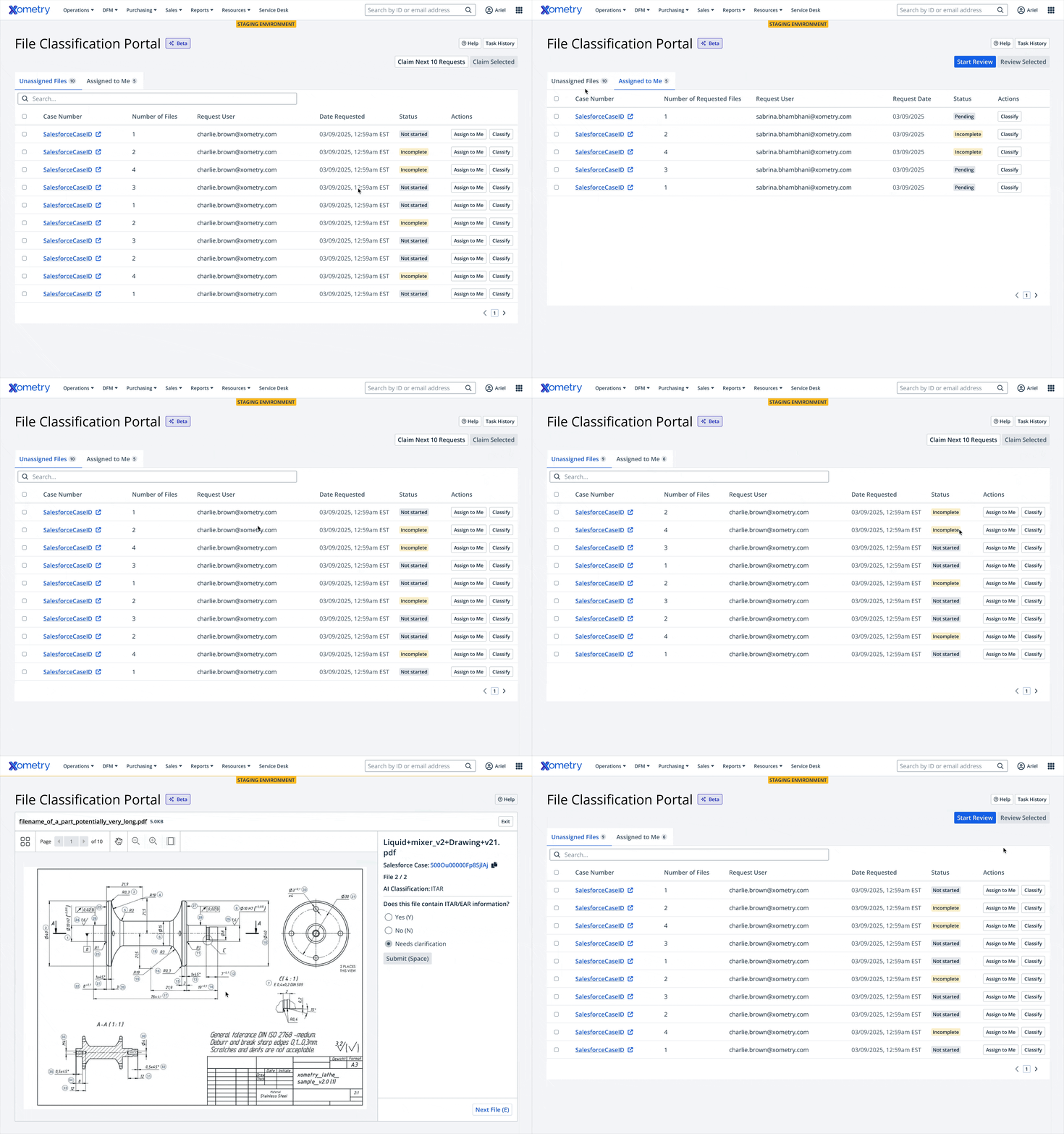
After initial testing and feedback rounds with the core team, we were unfortunately hit with a major slowdown getting the backend working as desired. Since the project had already been delayed due to upper-level management changes, A/B testing and a thorough evaluation of quantifiable metrics were delayed beyond my time at Xometry. After discussion with the team and my managers, we decided to rollout a Phase 1 design in order to offset the pain points faced by staff and operational costs impacting business growth. I was able to get early feedback on my testable prototype, refine the design, and release Phase 1 thanks in huge part to my incredible team.
Initial phase 1 release and immediate outcomes.
Although staffing limitations hindered a comprehensive Phase 2, I helped deliver the Phase 1 of the new file classification portal experience from start to finish. I also prepared all project deliverables for hand-off with recommendations for next steps. Some immediate wins we achieved through this project:
Boosted efficiency
Through reduced platform navigation
Enhanced security
With on-platform security traceability
Optimized scalability
By reducing workload on manual quoters
Future cost reduction
Via augmented hiring with international staffing
Next case
Xometry - Capabilities Management